

Small Details Can Make a Big Difference

Sometimes achieving the best orthodontic result involves more than moving teeth. Excess or uneven gum tissue can affect how a smile looks, how easily teeth can be treated, and how comfortable certain areas feel during orthodontic care.

At Farrow Orthodontics, Dr. Farrow may use a diode laser to gently reshape or remove small amounts of soft tissue when it can improve treatment access, comfort, or the final appearance of your smile.

What Is Diode Laser Treatment?

Precise Care for the Soft Tissues Around Your Smile

A diode laser is a specialized dental laser used to treat soft tissue around the teeth and gums. It allows Dr. Farrow to work with a high level of precision while targeting only the tissue that needs attention.

Because the laser works directly on soft tissue, it can often make certain orthodontic procedures more efficient and comfortable while supporting a cleaner, more balanced smile.

How Can a Diode Laser Help?

Supporting Both Treatment and Smile Esthetics

Diode laser treatment may be recommended when excess or uneven gum tissue is affecting your orthodontic treatment or the appearance of your smile.

  • Reshape uneven gum tissue
  • Remove small amounts of excess gum tissue
  • Expose more of a tooth for orthodontic treatment
  • Improve access to teeth that have not fully erupted
  • Refine the gumline after orthodontic movement
  • Improve the balance between the teeth and gums
  • Address certain soft-tissue concerns during treatment

Every recommendation is based on your individual smile and treatment needs.

Why We Use Diode Laser Technology

Precise. Efficient. Designed With Comfort in Mind.

Diode lasers give Dr. Farrow greater control when working with delicate gum tissue. The technology allows her to make very precise adjustments without affecting the surrounding areas unnecessarily.

For many patients, laser treatment can also involve minimal bleeding and a relatively simple recovery. When appropriate, it allows us to address small soft-tissue concerns directly in our office as part of your overall orthodontic care.

img-farroworthodontics-clearbraces-featured-02

How Can a Diode Laser Help?

Supporting Both Treatment and Smile Esthetics

Diode laser treatment may be recommended when excess or uneven gum tissue is affecting your orthodontic treatment or the appearance of your smile.

  • Reshape uneven gum tissue
  • Remove small amounts of excess gum tissue
  • Expose more of a tooth for orthodontic treatment
  • Improve access to teeth that have not fully erupted
  • Refine the gumline after orthodontic movement
  • Improve the balance between the teeth and gums
  • Address certain soft-tissue concerns during treatment

Every recommendation is based on your individual smile and treatment needs.

What to Expect

A Simple Addition to Your Treatment Plan

If Dr. Farrow believes diode laser treatment could benefit your smile, she will explain exactly what is being recommended and why before moving forward.

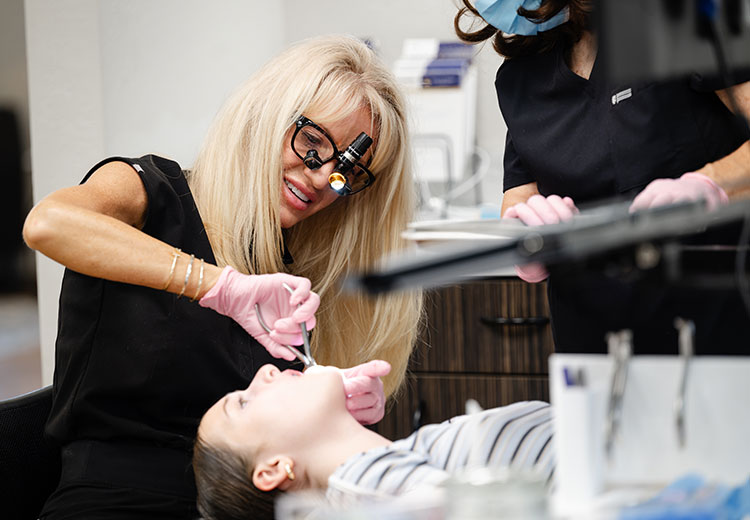
The area is carefully treated using the laser, and the procedure is typically focused on a small section of gum tissue. Afterward, our team will provide instructions for keeping the area comfortable and clean while it heals.
Diode Laser Treatment & Your Final Smile

It’s Not Always Just About Straight Teeth

Orthodontics focuses on creating healthy alignment and a functional bite, but the relationship between your teeth and gums can also influence the final appearance of your smile.

In certain cases, carefully reshaping the gumline can reveal more of the natural tooth, improve symmetry, and help create a more balanced finished result. Dr. Farrow considers these details as part of the bigger picture when planning your care.

Is Diode Laser Treatment Right for You?

Not every orthodontic patient needs laser treatment. Dr. Farrow will only recommend it when there is a specific soft-tissue concern that can benefit from the procedure.

If diode laser treatment is appropriate for your smile, it can be incorporated into your orthodontic plan at the right time to support both treatment progress and your final result.